01
Crawlability
Internal crawl paths, blocked resources, crawl traps, orphaned pages, response codes and technical barriers that prevent reliable discovery.
A technical SEO audit for complex WordPress and ecommerce websites. The goal is to identify what blocks crawling, indexation, site understanding and internal authority flow — then turn the findings into a prioritized plan your team can actually implement.
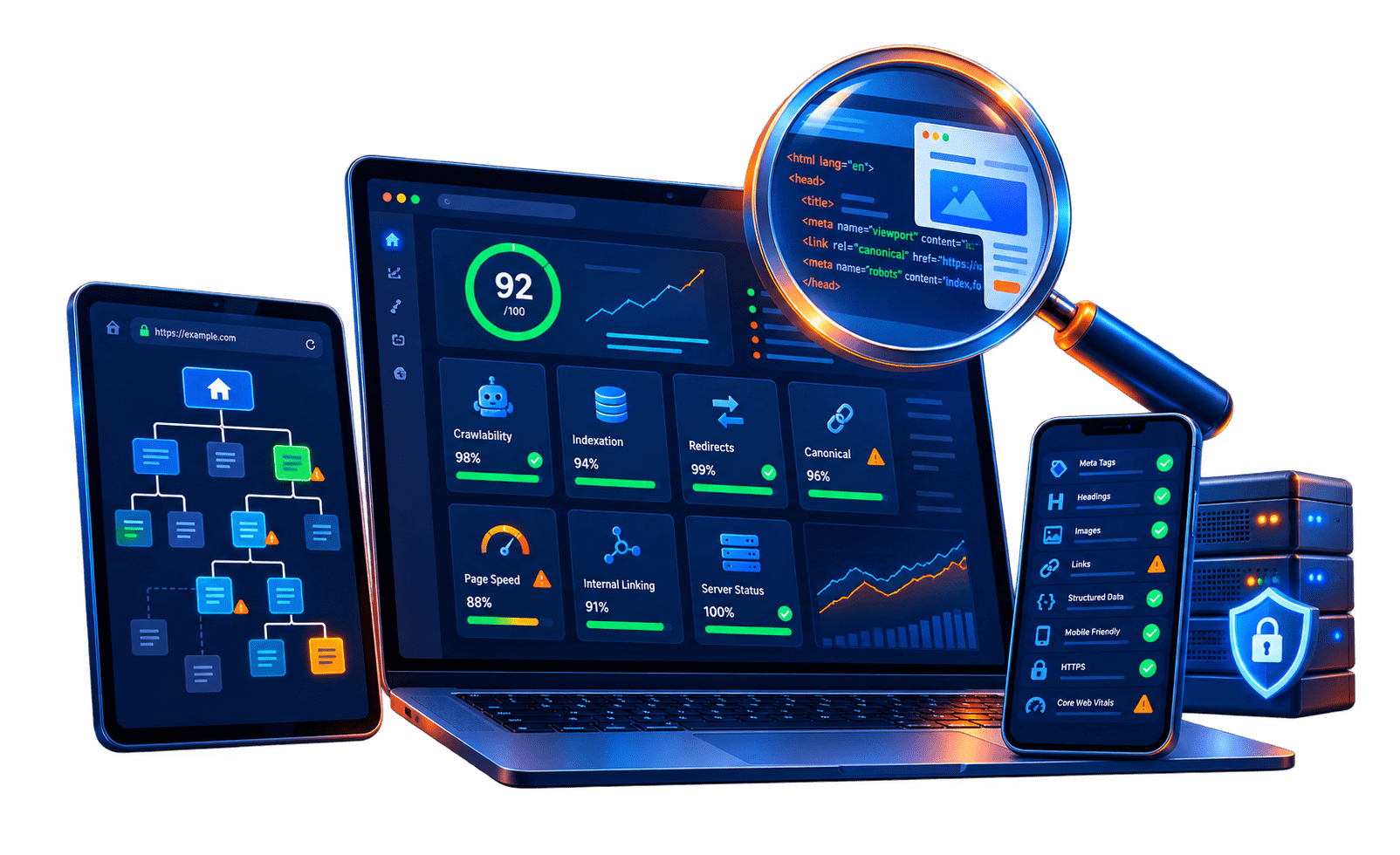
The exact scope depends on the website, but the audit is built around the technical signals that determine whether search engines can efficiently discover, crawl, understand and prioritize the right URLs.
Internal crawl paths, blocked resources, crawl traps, orphaned pages, response codes and technical barriers that prevent reliable discovery.
Indexable versus non-indexable pages, noindex signals, canonical behavior, duplicate URL patterns and pages that should or should not appear in search.
Canonical consistency, duplicate variants, parameter URLs, conflicting signals and template-level canonical mistakes.
301/302 chains, redirect loops, 4xx/5xx responses, broken internal links and unnecessary hops that weaken crawl efficiency.
URL hierarchy, click depth, internal authority flow, navigation structure and how easily important pages can be reached.
XML sitemaps, robots directives, meta robots, structured data and other signals that help search engines interpret the site correctly.
Automated crawlers are useful for collecting evidence. The audit adds the layer that tools do not provide on their own: diagnosis, prioritization, context and implementation guidance.
Each meaningful issue is tied to the URLs, patterns or technical behavior that supports the conclusion.
Critical, high, medium or low based on likely SEO impact, scale and dependency on other fixes.
A clear explanation of the intended technical result so the implementation team knows what should change.
Where appropriate, the expected post-fix behavior is defined so the change can be verified after deployment.
Define the website type, key templates, business-critical sections and the technical symptoms that need investigation.
Run crawls, inspect HTTP behavior, source code, indexation signals, internal linking and relevant technical configurations.
Separate systemic problems from low-impact noise and organize the fixes by likely impact, scale and dependency.
Provide the implementation-ready plan and, when included in scope, review the corrected behavior after fixes go live.
The timeline depends on the size and complexity of the website. A focused audit can be completed faster than a large ecommerce or migration review with many URL patterns and templates.
No. For WordPress and suitable technical tasks, implementation support can be added to the scope so the project does not stop at the audit document.
Yes. Large websites require prioritization by template and issue pattern rather than treating every crawler warning as an equal problem.
Yes. The audit can be delivered as a defined technical module inside the agency's existing workflow and client relationship.
Send the website URL and a short description of the problem. I can review the scope and determine whether you need a focused diagnostic, a full technical SEO audit or a more specialized ecommerce investigation.